
Photo by Sasun Bughdaryan on Unsplash
The concept of a data dividend — compensating individual tech users for use of their personal data — saw its cultural genesis in the late 2010s. Following the 2018 Cambridge Analytica scandal, in which tens of millions of individuals’ Facebook data was scraped and sold for political advertising, public indignation arose over such unintended consequences, as well as heightened awareness of the profitability for large tech corporations. Envisioning an alternate reality in which private citizens could be remunerated rather than exploited, Brunel University professor William David Watkin wrote:
…why couldn’t we monetise our own lives just as the big tech companies have? If Facebook knows enough about me to advise me on what sort of shelf brackets I need, why couldn’t this same level of insight be applied to more important, more technical, complex political decisions that need to be made by citizens, for their benefit?
In 2019, Governor Gavin Newsom responded to the moment by proposing a Data Dividend for Californians. Entrepreneur Andrew Yang, in his 2020 Democratic bid for presidency, put forward a similar idea under his Data Dividend Project. Both schemes upheld a utopic vision of data rights and profits being returned to users, either individually or through investment in public services. Both US Democratic leaders sought to hold Silicon Valley to account and legislate the redemocratisation of personal data.
And yet, a mere six years later, there are few signs of life on either of these projects. Currently, the Data Dividend Project blog yields a broken link, and Newsom’s Data Dividends website remains a single page of ideas. Large tech corporations such as Meta and Amazon continue to collect, aggregate, and profit from users’ information via targeted advertising, while the very phrase ‘data dividend’ seems to have disappeared from contemporary political discourse. Where did the momentum go?
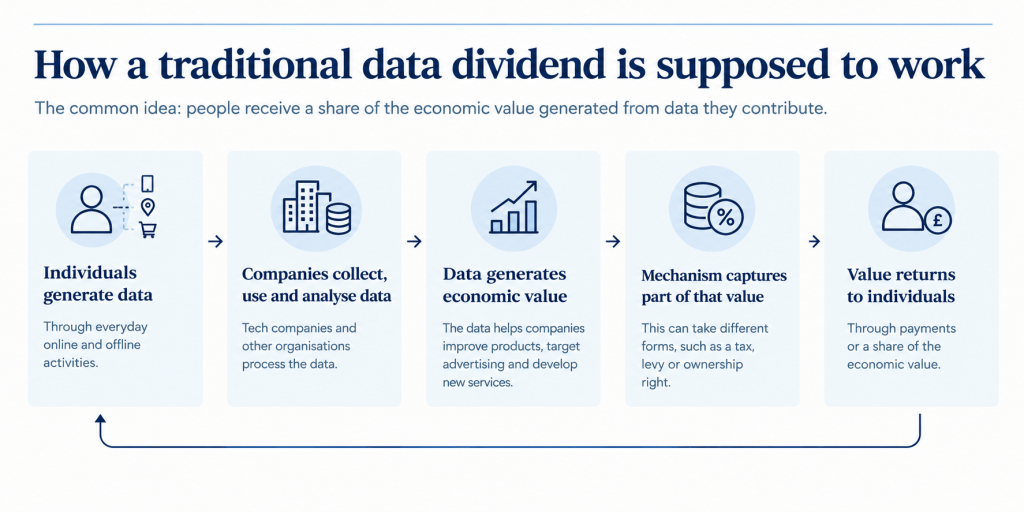
Figure 1: A ‘traditional’ data dividend model
A ‘traditional’ data dividend model promises direct returns to the user whose information has been harvested and monetised (Figure 1). This straight-to-contributor approach has, at various points, been considered technically and legally impractical, with concerns raised around valuation, proportion of contribution to expected returns, and overall implementation costs. In a 2019 US Senate hearing on data ownership and valuation, cyberlawyer Jeffrey Ritter highlighted the lack of legal clarity around data ownership as an underlying barrier to addressing how that data should be properly handled, as well as how users’ rights ought to be respected. Data ownership is in itself a contentious concept, with some legal experts raising concerns around the infringement of others’ rights if personal data is fully treated as personal property. In recent years, widespread adoption of generative AI (GenAI) has added another layer of complexity to any such scheme which seeks to directly recompense contributors (Figure 2).
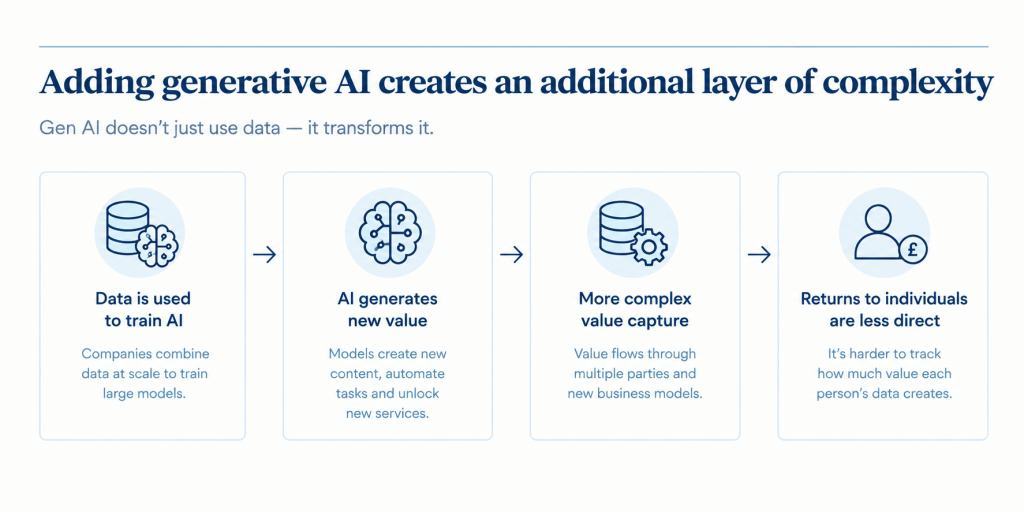
Figure 2: How GenAI creates additional complexity
While academic exploration of data valuation is still underway, some legislative proposals have sought to simplify the calculus by adjusting their focus towards taxing data extraction. California Senate Bill 1327 (2024) proposed a fee upon certain large transactions related to personal advertising data, with the proceeds to go towards funding journalism (Figure 3). In a similar vein, New York Senate Bill S3702 (2025-2026) contains a 5% charge on income created from New Yorkers’ personal data; the tax revenue would be paid back to individual state taxpayers at large.
As legislative bodies pursue viable implementations of the dividend principle, the outcomes appear less as individual royalties and closer to profit redistribution, with the state government occupying the role of mediator. The relationship between the original contributor, their data’s valuation, and the endpoint of any profits thereof grows more and more tenuous. The definition of what a ‘data dividend’ could be is constantly evolving.
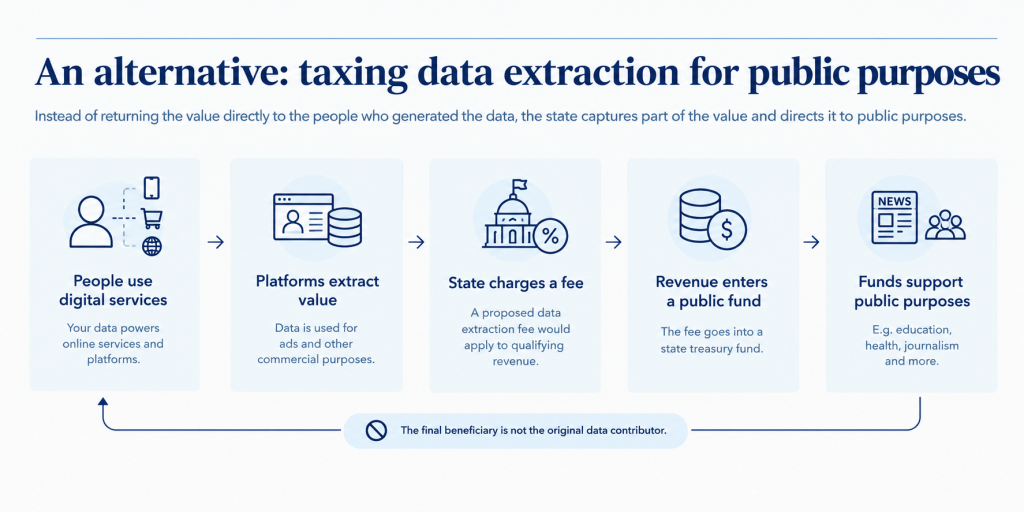
Figure 3: Taxing data extraction for public purposes
While the New York senate bill remains under consideration, a similar concept has already been conceived and executed in South Korea’s Gyeonggi Province. Prior to his current presidency, Lee Jae-myung was governor of Gyeonggi at this pivotal time (2018–2021) and championed a vision of ‘data sovereignty.’ Lee positioned his 2020 pilot programme as putting profits back into citizens’ pockets and inspiring future public and private endeavours.
The Gyeonggi experiment reallocated profits derived from transaction data involving the Gyeonggi Local Currency from April to December 2019 (Figure 4). The transaction data was centralised, making it possible for Lee’s administration to access it easily and run their calculations. Once the value was determined, a return of KRW 120 (approximate £0.08 GBP) per card was credited to over 360,000 cardholders.
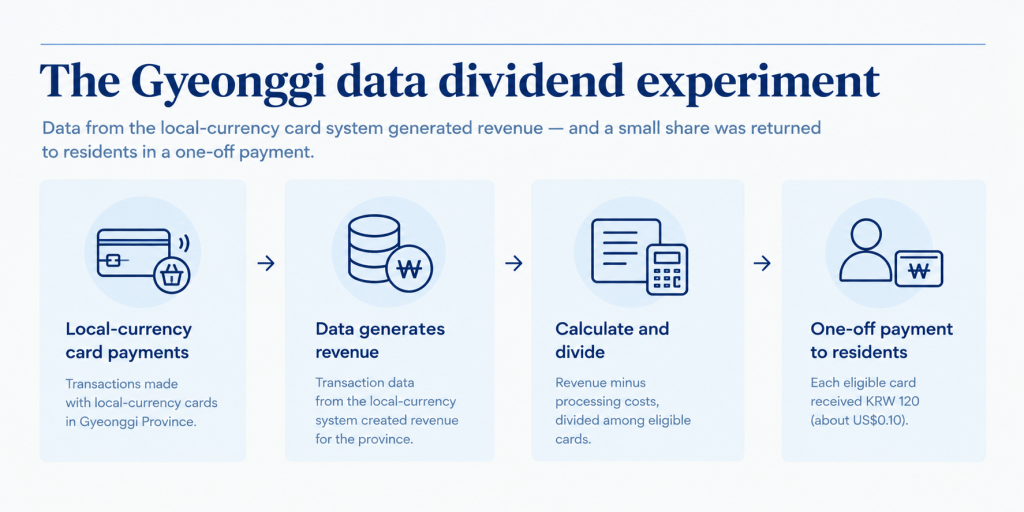
Figure 4: The Gyeonggi experiment
Three features of Lee’s pilot programme are particularly worth noting: one, that the calculus benefited substantially from a centralised, standardised datasource; two, that the data originated from local-currency card payments, a relatively simple scenario; and three, that the individual dividends were very small, an ongoing objection raised by those in the aforementioned US Senate hearing and elsewhere.
It is conceivable that a similar scheme could be constructed within a particular tech company’s ecosystem, e.g. Meta. Yet it does not follow that Meta’s profits generated from user data, while vastly larger than those in Lee’s pilot, would actually amount to a greater per-capita return, since the Meta userbase is also exponentially larger than the card-holding population of Gyeonggi. Details of what values would be attributed to which factors—including Meta-owned algorithms, relationships, and platforms—add further difficulties. A similar challenge in data governance has already been encountered by organisations seeking to adhere to the EU General Data Protection Regulation (GDPR) and other data protection laws. Multinationals such as Meta are navigating data hosted and transferred across multiple jurisdictions, incurring significant compliance costs. A data dividend would add another layer of complexity that organisations are not currently equipped to handle.
At present, the strategy of reinvesting data-extraction profits towards public use may be the clearest course for those governments looking to enact the spirit, rather than the letter, of data dividends. Whether the end user will directly benefit from, or feel ownership of, these proposed investments remains to be seen. Perhaps the user will benefit more immediately from efforts such as the EU’s 2022 Digital Markets Act, which prompted Meta to offer EU users a less-personalised free account option using minimal personal data. In any case, a balancing act between individual, state, and corporations continues in these discussions, with opportunities to innovate on a local level.

